
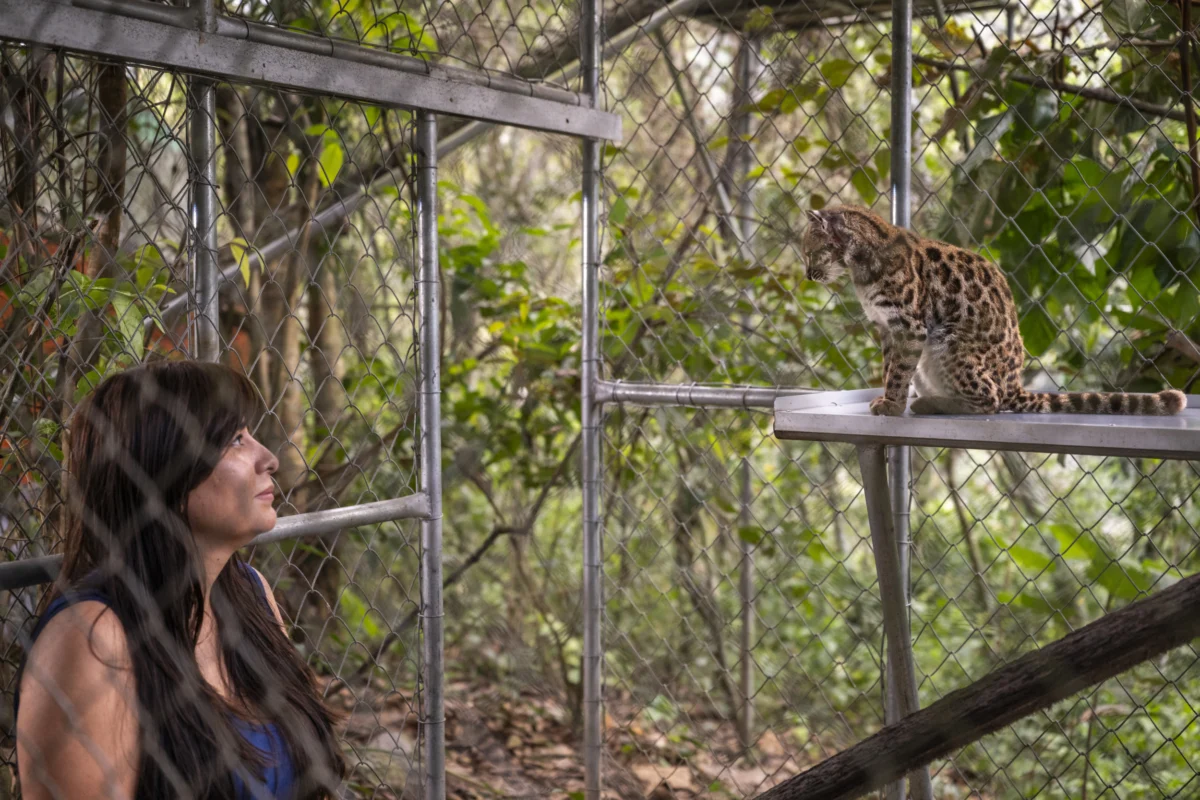
In a landmark achievement for neotropical biology, a team of international researchers has officially described a previously unknown species of small cat native to the high-altitude Yungas cloud forests of Bolivia. The animal, formally named Leopardus tilcayo, represents the first discovery of a new living species of the Felidae family in more than 100 years. The findings, published in the journal Current Biology on September 17, 2026, provide a significant correction to the taxonomic history of South American small cats, which have long been shrouded in scientific ambiguity.
The Taxonomic Puzzle: Unraveling the Tiger Cat Complex
For decades, the scientific community struggled to categorize the diverse array of small, spotted felines roaming the South American landscape. Traditionally, these animals were collectively referred to as "tiger cats" and lumped under the single species designation Leopardus tigrinus. However, as genomic sequencing technology became more sophisticated, researchers began to suspect that the group was a mosaic of distinct lineages rather than a single, homogenous population.
The process of unraveling this genetic web required years of intensive field research and laboratory analysis. The recent study confirms that what was once considered a single entity is actually composed of at least four genetically distinct species. While some of these separations resulted from reclassifying existing subspecies, the Leopardus tilcayo is unique in that it had remained entirely undescribed by Western science until now. The identification process relied on advanced phylogenomics—the study of evolutionary relationships through DNA analysis—which revealed that the tilcayo diverged from its closest relatives approximately 1.4 million years ago. This evolutionary timeline is striking; for context, it is nearly double the time that has elapsed since the divergence of modern humans and Neanderthals.
A Chance Encounter: The Story of Tigrino
The path to scientific discovery often involves a mix of rigorous field work and unexpected fortune. The breakthrough for the research team came in 2017 when a local Bolivian family arrived at the Senda Verde Wildlife Sanctuary near La Paz. The family had rescued an orphaned kitten years prior, assuming it was a common domestic cat. As the animal matured, however, its behavior became increasingly predatory, leading to local concerns when the small cat began successfully stalking and killing the neighbors’ chickens.

Recognizing that the animal was far from a standard house cat, the family surrendered it to the sanctuary. Named "Tigrino," the cat became the subject of intense study. Paola Nogales-Ascarrunz, a National Geographic explorer and researcher at the Universidad Mayor de San Andrés, spearheaded the investigation. By comparing genetic samples taken from Tigrino and a second, wild-caught specimen that had been rehabilitated and released, the researchers were able to confirm that the animal belonged to a distinct evolutionary branch.
The name Leopardus tilcayo was chosen specifically to honor the traditional knowledge of the local communities in the Yungas region, who had recognized the cat as a unique entity long before scientists arrived to document it. This collaborative approach highlights a growing trend in conservation biology: the integration of local ecological knowledge with formal taxonomic research.
Physical Characteristics and Ecological Niche
The tilcayo is a diminutive predator, weighing in at approximately 1.4 kilograms (3 pounds), making it significantly smaller than the average domestic cat. Its physical appearance is striking, characterized by a slender body, rounded ears, and a coat adorned with large, distinct spots that help it blend into the dappled light of the cloud forest canopy.
The Yungas cloud forests, located on the eastern slopes of the Andes, provide a complex, high-humidity environment that acts as an evolutionary laboratory. These forests are known for high levels of endemism—species that exist nowhere else on Earth. The tilcayo’s adaptation to this specific, fragmented ecosystem likely played a role in its long-term isolation from other tiger cat populations, allowing it to evolve into a distinct species.
Historical Context and Scientific Significance
The last time a living cat species was formally described was in 1923, with the classification of the Uruguayan pampas cat (Leopardus fasciatus). The century-long gap between that discovery and the identification of Leopardus tilcayo illustrates how challenging it is to identify new mammals in the modern era, particularly in regions that are difficult to access.

The discovery serves as a reminder of how much biodiversity remains hidden in plain sight. Taxonomy—the science of naming and classifying organisms—is not merely an academic exercise; it is the foundation of conservation. Without a formal name and a recognized genetic profile, a species cannot be effectively protected by international law or local wildlife regulations. The confirmation of the tilcayo as a unique species now allows for the development of targeted conservation strategies tailored to its specific habitat needs.
Implications for Future Conservation
The formal recognition of Leopardus tilcayo brings with it an immediate responsibility to monitor and protect the species. Because it is found in the sensitive cloud forest environments of Bolivia, the cat is likely vulnerable to the pressures of climate change, habitat loss, and human encroachment.
"I have the honor of naming a cat, and that is a really big thing," Nogales-Ascarrunz remarked following the publication of the findings. Her sentiment is echoed by the broader scientific community, which views the discovery as a call to action. The study provides a blueprint for how researchers can utilize museum specimens, genetic data, and community-sourced observations to reassess the status of other potentially "hidden" species across the globe.
As the only known living individual of the species in protective custody, Tigrino represents a living link to a previously unknown chapter of evolutionary history. Researchers are now tasked with estimating the population size of the tilcayo in the wild and identifying the primary threats to its survival. The discovery is expected to shift the focus of conservation efforts in the Yungas region, potentially leading to the establishment of new protected corridors that prioritize the habitat requirements of this small but significant predator.
A Paradigm Shift in Biodiversity Studies
The case of the tilcayo demonstrates the necessity of re-evaluating long-held assumptions in biological classification. For years, the scientific community operated under the assumption that the biodiversity of small South American cats was already fully documented. This discovery proves that even within well-studied groups, significant diversity can remain obscured by outdated taxonomical frameworks.

The use of molecular evidence to "unwind" the genetic web of the Leopardus genus is part of a broader shift in biology. By utilizing genomic data, researchers can now identify cryptic species that are morphologically similar but genetically distinct. This methodology is proving vital in an era of rapid environmental change, as it allows scientists to quantify biodiversity with a level of precision that was impossible only a few decades ago.
As the scientific community celebrates this rare addition to the global catalog of life, the focus now turns toward the future. The tilcayo is a symbol of the resilience of nature in the high-altitude forests of the Andes. Its discovery serves as a poignant reminder that while humanity has mapped much of the planet, the natural world still holds profound mysteries waiting to be uncovered, provided we possess the patience to look closely and the wisdom to listen to those who live closest to the wild.

