
In a secure, climate-controlled facility in the heart of Hamburg, Germany, technicians are methodically installing rows of gray metal server racks. These units, part of the German Climate Computing Center (DKRZ), are being prepped to house an additional five petabytes of data, augmenting an existing 254-petabyte archive. While the DKRZ is traditionally a domestic resource for German researchers, its current expansion serves a burgeoning, high-stakes mission: safeguarding the integrity of United States climate science against a backdrop of systemic political interference. This operation, part of a broader, internationally coordinated effort, aims to ensure that decades of empirical research remain accessible, uncorrupted, and preserved for the next major United Nations climate assessment, scheduled for 2029.
The urgency of this initiative is driven by a series of unprecedented actions taken by the Trump administration. Since 2025, U.S. federal climate research has faced aggressive downsizing, including the mass deletion of climate-related content from government websites, the suppression of peer-reviewed reports, and the systematic defunding of observational programs. By creating "digital lifeboats"—redundant, off-site, and immutable repositories—international scientific organizations are attempting to mitigate the risk that vital data could be permanently erased or manipulated to fit a political narrative.
A Chronology of Scientific Erosion
The current climate of uncertainty did not emerge in a vacuum. It is the culmination of several years of friction between the U.S. executive branch and the global scientific community.
- January 2025: The United States formally withdraws from the United Nations Framework Convention on Climate Change (UNFCCC) and the Intergovernmental Panel on Climate Change (IPCC), signaling a total decoupling from international climate governance.
- April 2025: The Department of Government Efficiency (DOGE) initiates the removal of foundational datasets from NASA’s Socioeconomic Data and Applications Center (SEDAC). This move triggers an emergency "rescue" operation, where researchers frantically scrape active servers to move information to the Harvard Dataverse Repository.
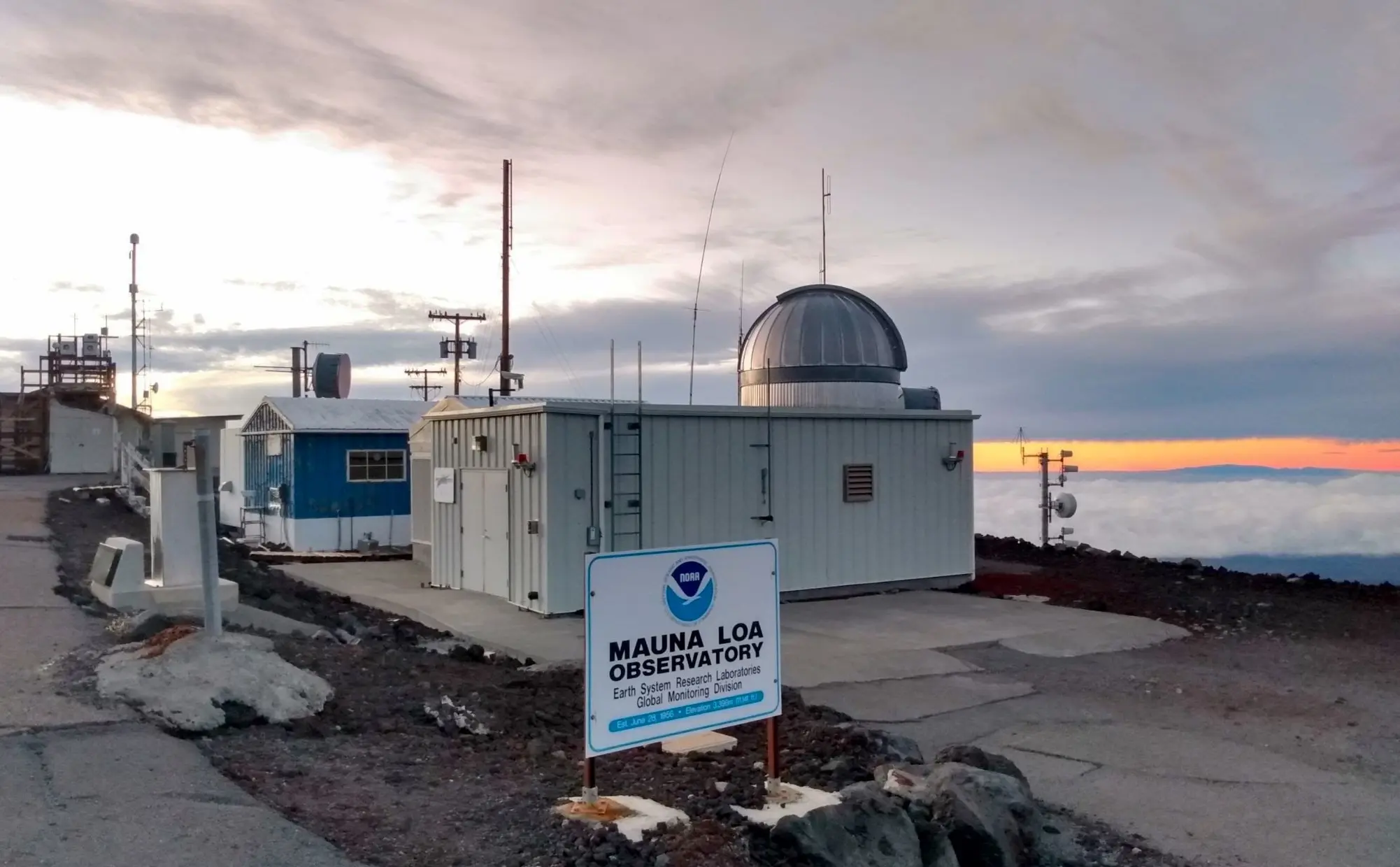
- Summer 2025: The U.S. government makes an attempt to shutter the Mauna Loa Observatory in Hawaii. While the effort is ultimately blocked by Congress, the move sends shockwaves through the geophysical community, highlighting the vulnerability of long-term environmental monitoring.
- Late 2025: The German Research Foundation (DFG) allocates $35 million to fund data resilience projects, explicitly designed to act as a secure vault for U.S.-generated public domain data.
- March 2026: At the American Geophysical Union (AGU) gathering in Berlin, global experts reach a consensus that the era of relying on centralized, government-controlled repositories has ended.
The Vulnerability of Digital Infrastructure
The necessity of these backups reveals a flaw in the modern scientific model. For decades, the scientific community operated under the assumption that public research data would remain indefinitely accessible through government-funded channels. This assumption was rooted in the principle that taxpayer-funded science is a public good.

However, the "physicality" of data is often overlooked. Scientific information is not ethereal; it exists on magnetic tapes, hard drives, and solid-state arrays housed in specific physical locations. These sites are susceptible to hardware failure, natural disasters, and, as currently demonstrated, human intervention. The cost of transferring massive datasets—often involving "sneakernets," where physical drives are shipped via secure logistics—is high, yet the cost of data loss is effectively infinite.
"The data repositories, digital asset management services, and preservation systems that ensure research data remains open and accessible are often overlooked—until they disappear," warn data scientists Jennifer Gibson and Kaitlin Thaney. When these systems are centralized under a single political authority, they become a single point of failure.
Institutional Responses and Global Coalitions
The international response has been swift and highly organized. Initiatives such as the CMIP7-ark project, which secures U.S. contributions for the IPCC’s seventh assessment, and projects like SHIELD and SEND (Secure Endangered Earth Data), are now critical pillars of global climate research.
The AGU, representing over 60,000 scientists, has transformed from a purely academic body into a logistical hub for scientific survival. When the U.S. government refused to nominate participants for IPCC meetings in 2025, the AGU bypassed federal channels to form the U.S. Academic Alliance for the IPCC, ensuring that American researchers could still contribute to the global discourse.
"We have engaged in triage efforts to ensure data remains usable and accessible," said Ben Zaitchik, president-elect of the AGU. "But we clearly now have arrived at a moment where we must fundamentally reimagine data organization and maintenance for long-term viability and growth."
Broader Implications and Geopolitical Risks
The threat to scientific data is not exclusive to the United States. Recent years have seen a surge in targeted cyberattacks against research institutions in Croatia and Germany, where digital extortionists have held critical files hostage. Furthermore, the war in Ukraine has underscored the physical risks to science, as Russian bombardments have destroyed university archives and laboratory infrastructure.
Ukrainian researcher Anastasiia Lutsenko notes that the destruction of scientific records is a deliberate tactic of warfare. By attacking the foundation of a nation’s intellectual history, aggressors seek to inflict long-term societal damage. Consequently, the digitization and off-site transfer of historical meteorological data—such as the 19th-century records moved to the University of Giessen—have become as important as frontline defense.
For scientists like Frank Oliver Glöckner, a professor at the University of Bremen, the current crisis has provided a painful but necessary lesson in global interdependence. "President Trump has, to a certain extent, done science a favor by making it clear how important it is to not just hoard data in one place but to truly share it with the global scientific community," Glöckner remarked.
Future-Proofing the Scientific Record
The emergence of these decentralized data networks represents a fundamental shift in how scientific knowledge is managed. The ideal, according to experts at the DKRZ, is a web of interconnected digital pipelines where data is automatically mirrored across multiple jurisdictions. If a political administration in one country attempts to censor or delete specific findings, the data would remain live and verified in nodes located in neutral or supportive nations.
This is not merely a precautionary measure for the U.S. political landscape. As political volatility increases worldwide, including the rise of climate-skeptic movements in Europe, even institutions in countries currently seen as stable are beginning to rethink their reliance on national infrastructure.
"We don’t know what political shifts may occur in Germany," says Christopher Kadow of the DKRZ. "We aren’t completely protected from risks or developments like those in the U.S. either."
Ultimately, the effort to move petabytes of climate data across oceans and into protected, foreign-hosted servers is a statement of defiance. It asserts that scientific facts, once discovered, belong to the human race, not to the ephemeral political agendas of any single government. As the world approaches the 2029 UN climate assessment, the success of this global data lifeboat will determine whether humanity’s understanding of its changing climate remains a record of truth or a casualty of political maneuvering. The infrastructure being built in Hamburg today is not just a collection of servers; it is a repository for the future of evidence-based policy.

