
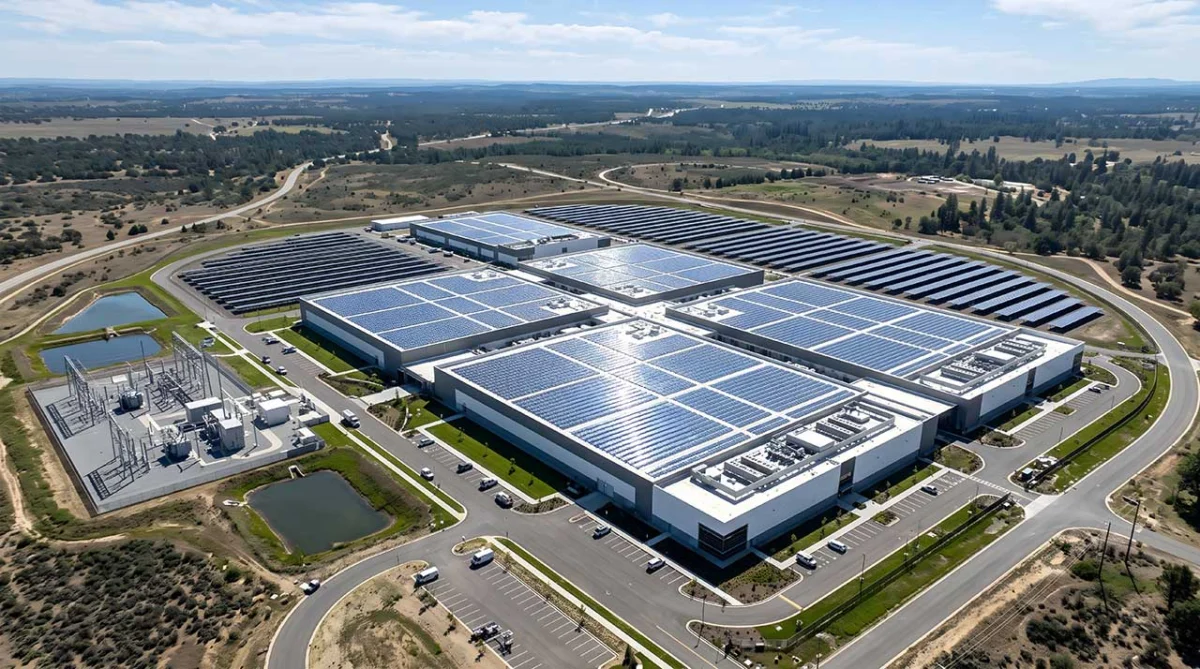
The rapid commercialization of artificial intelligence has transitioned from a software revolution into a massive physical infrastructure challenge. While early public discussions centered on the intellectual capabilities and economic potential of generative AI, attention has decisively shifted to the underlying resource consumption required to sustain these systems. Behind every simple query, complex agentic workflow, and multi-day reasoning task lies a complex web of electricity generation, water allocation, and geopolitical land-use disputes. As the technology permeates daily consumer and enterprise routines, policymakers, utility regulators, and local communities are forced to confront the tangible environmental and financial costs of digital intelligence.
The debate over the environmental footprint of artificial intelligence is fundamentally rooted in a shifting scale of computational intensity. A basic query directed at a consumer chatbot typically consumes an amount of electricity roughly equivalent to running a microwave oven for one second. However, the operational paradigm of generative AI has evolved significantly. Modern applications increasingly rely on autonomous agents—complex systems that plan their own multi-step processes, execute web searches, test code, and evaluate outputs iteratively until a desired objective is met. According to recent technical evaluations, a single advanced agentic task can consume as much electricity as powering a standard laptop continuously for nearly six hours. This dramatic disparity in power consumption has introduced a complex set of environmental trade-offs that extend far beyond theoretical carbon metrics.
The Evolution of Emissions Research and Computational Efficiency
Academic efforts to quantify the environmental impact of AI have produced conflicting results, sparking rigorous debate within the scientific community. In February 2024, researchers from three universities published a comparative study in Scientific Reports suggesting that an AI model generating a page of text produced 130 to 1500 times less carbon dioxide than a human writer completing the same task. The methodology calculated human emissions by dividing an average American’s annual carbon footprint by the total hours in a year, and then allocating that hourly rate to the duration of the writing assignment.
Critics quickly identified structural flaws in this analytical approach. Environmental commentators and researchers pointed out that human baseline emissions—such as home heating and personal transportation—occur regardless of whether an individual is actively writing. Consequently, the calculation overestimated human occupational emissions. The actual variable cost of human labor is primarily the electricity consumed by a personal computer, which over a multi-day project equates to roughly two kilograms of carbon dioxide emissions, significantly lower than the study’s initial projections.
A direct response published in the same journal in November 2025 refined the methodology by evaluating the quality and correctness of the output. By testing AI models against competitive programming challenges and factoring in the iterative computing cycles required to reach correct solutions, researchers demonstrated that emissions scale directly with the number of computational attempts a model requires to complete a task. While older models struggled with high failure rates, recent advancements documented in industry benchmarks indicate that top-tier models have achieved substantial accuracy improvements, altering the efficiency equation. Furthermore, International Energy Agency reports emphasize that the energy efficiency of AI tasks is improving at a historic rate, driven by commercial incentives to reduce operational overhead.
The Mathematics of Autonomy and Jevons Paradox
The widespread adoption of autonomous agents has complicated traditional energy accounting. While isolated, single-turn prompts demand minimal computational energy, agentic workflows require continuous processing, memory allocation, and multi-agent coordination. Research from leading engineering institutions indicates that single-agent tasks can consume hundreds of watt-hours, driven primarily by extended processing times and hardware idle periods where high-performance accelerators draw power while awaiting external search results or program compilations.
This efficiency paradox is further magnified by behavioral economics. Economic analyses tracking workforce integration reveal that employees utilizing advanced AI tools frequently reinvest time savings into increased output rather than reduced working hours. This dynamic mirrors Jevons Paradox, an economic principle observed during the Industrial Revolution where technological improvements that increased the efficiency of coal usage ultimately led to a surge in total consumption rather than a conservation of resources. As AI tools become faster and more cost-effective, their integration into broader workflows threatens to multiply aggregate energy demand.
Strain on Regional Power Grids and Consumer Utility Bills
The localized financial impact of data center expansion has transformed abstract environmental concerns into immediate household economic pressures. Grid operators responsible for managing regional power supplies have recorded unprecedented spikes in capacity auction prices, driven largely by the projected electrical demand of forthcoming data center campuses. For instance, capacity markets administered by regional transmission organizations like PJM have experienced dramatic cost escalations, with independent market monitors attributing a majority of the surge to anticipated data center loads.
These capacity shortfalls translate directly into elevated utility expenses for residential and commercial ratepayers. Across multiple states, consumers have observed noticeable increases in monthly electricity bills. In response to mounting public pressure, state utility commissions and legislative bodies are actively exploring regulatory frameworks designed to segregate residential rate structures from the heavy energy demands of industrial technology facilities. Proposals include mandatory long-term power purchase agreements, dedicated rate categories, and requirements that data center developers fund the construction of dedicated generation capacity to prevent cost-shifting to everyday consumers.
Water Resource Allocation and Scarcity Concerns
While electrical consumption dominates policy debates, water usage remains a critical friction point in municipal infrastructure planning. Data centers utilize vast quantities of water for cooling server hardware, typically through evaporative cooling towers. While direct facility consumption accounts for a minor percentage of total national water withdrawals, the concentration of massive data center campuses in arid regions creates severe localized resource competition.
Moreover, direct facility consumption represents only a fraction of the total hydrological footprint. Generating the electricity consumed by data centers requires substantial water usage at thermoelectric power plants. Consequently, the indirect water footprint associated with powering a data center can exceed its on-site cooling requirements by an order of magnitude. This dual-layered consumption pattern has intensified scrutiny from local populations, particularly in water-stressed areas across the American Southwest, where municipal authorities must balance economic development incentives against long-term resource sustainability.
The Grassroots Backlash and Municipal Land-Use Conflicts
The cumulative pressures of electrical grid strain, water consumption, and land-use transformation have catalyzed a nationwide wave of civic opposition. Grassroots organizations tracking municipal zoning decisions have recorded a sharp rise in blocked or delayed data center projects. Opposition coalitions frequently unite diverse political constituencies; conservative lawmakers often focus on infrastructural strain and fiscal exposure, while progressive groups prioritize environmental justice, water rights, and carbon emissions.
High-profile disputes illustrate the divergent paths municipal governments take when confronting massive infrastructure proposals. In Tucson, Arizona, community mobilization successfully pressured the city council to reject infrastructure support and water annexation for a planned industrial campus, though developers subsequently pursued alternative sites outside municipal jurisdiction. Conversely, in Saline Township, Michigan, a local government’s initial rejection of agricultural rezoning for a large-scale data center facility resulted in immediate legal challenges from developers. Facing prohibitive litigation costs, the township ultimately negotiated a community benefit agreement to permit construction, highlighting the severe resource imbalances between multinational technology conglomerates and small local municipalities.
Regulatory Responses and Future Outlook
In response to widespread community resistance and escalating resource demands, state governments are implementing stringent regulatory measures. Jurisdictions such as New York have introduced legislative pauses on large-scale data center development, while numerous municipalities nationwide have enacted temporary building freezes and updated zoning codes to mandate stricter environmental reviews.
The future integration of artificial intelligence will depend heavily on infrastructure modernization, technological advancements in hardware efficiency, and the deployment of dedicated zero-carbon energy sources. As public scrutiny intensifies, technology firms and utility providers face mounting pressure to transparently disclose resource utilization metrics and ensure that the economic benefits of digital innovation are equitably balanced against local environmental and financial costs.

