
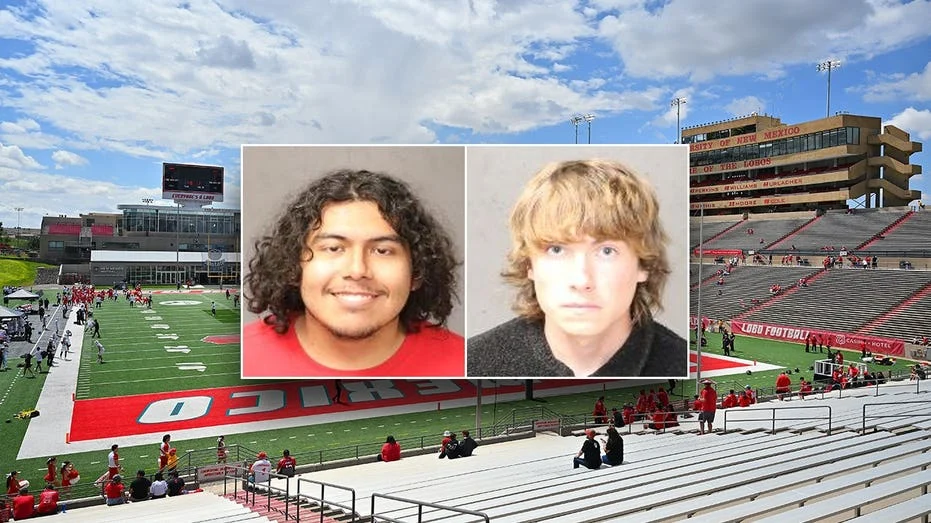
Political polarization on American college campuses and public spaces has once again boiled over into criminal investigations, highlighted by two separate, high-profile altercations involving conservative student organizations. In the first incident, law enforcement authorities at the University of New Mexico (UNM) took two individuals into custody following a volatile campus gathering hosted by the local chapter of Turning Point USA (TPUSA). Just a day later, thousands of miles away in New Hampshire, a separate confrontation erupted outside an active polling location, resulting in the arrest of a 70-year-old local resident accused of physically assaulting an 18-year-old Turning Point Action member.
These back-to-back episodes underscore an increasingly fraught climate for political discourse across the United States. As grassroots political organizations expand their presence at higher education institutions and public venues, university administrators, local law enforcement agencies, and community stakeholders find themselves grappling with the delicate challenge of balancing constitutionally protected free expression with the imperative of public safety.
The Albuquerque Incident: Alleged Conspiracy and Projectile Thrown at UNM
The disruption at the University of New Mexico occurred during a campus event organized by the university’s TPUSA student chapter. While official court documents did not explicitly name the gathering in preliminary filings, university context and campus schedules identified the function as a "Prove Me Wrong" interactive forum. The headline speaker for the evening was Kristan Hawkins, the prominent president of Students for Life of America, whose campus tours frequently draw large, polarized crowds of supporters and detractors alike.
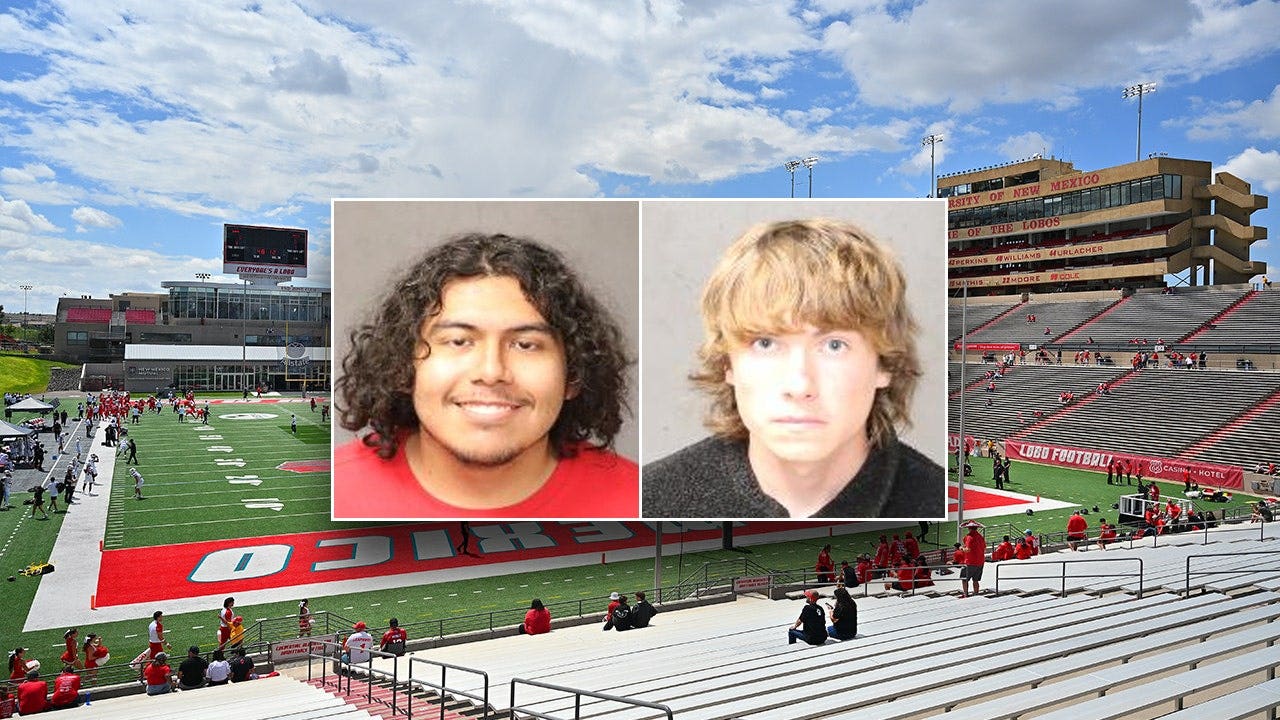
According to incident reports compiled by the University of New Mexico Police Department (UNMPD), the evening’s tensions spilled over into potential violence when attendees began exiting the designated event space. Investigators stated that 21-year-old Kevin Castro hurled a lacrosse ball directly into the gathered crowd, coming perilously close to striking an innocent bystander. The projectile, launched with enough force to pose a severe risk of blunt-force trauma, prompted immediate intervention from campus security and law enforcement personnel.
Following a rapid review of witness statements and physical evidence, UNMPD officers apprehended Castro alongside a second suspect, identified as 22-year-old Harrison Magnus. Subsequent court filings revealed that Magnus had allegedly been in close communication with Castro, actively discussing and coordinating plans to hurl objects into the crowd of event attendees.
Legal Ramifications and Official Charges
The legal fallout for the two young men is substantial, reflecting the seriousness with which law enforcement and prosecutors treat acts of targeted violence at public assemblies. Kevin Castro was booked into the Metropolitan Detention Center (MDC) facing a slate of serious charges, including aggravated assault with a deadly weapon, disorderly conduct, and criminal conspiracy. The inclusion of the deadly weapon charge stems directly from the use of the lacrosse ball as a projectile hurled into a densely populated area.
Harrison Magnus faces a similarly troubling set of legal hurdles. Although he was not accused of personally throwing the lacrosse ball, investigators charged him with criminal conspiracy, disorderly conduct, and concealing his identity from law enforcement officers during the initial detention process. Online video footage captured by the campus TPUSA chapter showed Magnus vocally shouting at surrounding crowds while handcuffed and escorted away by campus police officers.

University Administration Responds
In the wake of the arrests, the University of New Mexico administration moved swiftly to issue formal statements clarifying institutional policies regarding speech, safety, and student conduct. A UNM campus spokesperson reiterated the university’s unwavering dedication to the First Amendment, emphasizing that academic institutions must remain open forums for diverse ideological viewpoints. However, the administration drew a firm, unambiguous line between peaceful debate and unlawful behavior.
"UNM remains committed to providing a safe, healthy and inclusive environment for all who learn, work and live on our campuses," the official spokesperson said in a statement provided to the media. "The university upholds freedom of expression and will not tolerate threats, violence or other conduct that violates the law or university policies."
Legal representation for Harrison Magnus has been engaged, though statements regarding his specific defense strategy were not immediately available. Public records indicated that as of the initial court appearances, it remained unclear whether Kevin Castro had secured private legal counsel or would be represented by a public defender.
Parallel Escalation: The New Hampshire Polling Place Assault

Compounding the national narrative of heightened political friction, a strikingly similar confrontation occurred less than twenty-four hours later in New Hampshire. In an unrelated incident that quickly gained traction across social media platforms, a 70-year-old local poet was arrested after allegedly slapping a young conservative activist in the face outside an active polling station.
According to official logs from the Laconia Police Department, officers responded to the disturbance at approximately 8:00 a.m. The suspect, identified as Stephen Redic, was taken into custody following an argument that rapidly escalated from verbal sparring into physical battery. Police subsequently charged Redic with simple assault, classified as a misdemeanor, alongside a violation for disorderly conduct.
Chronology of the Laconia Confrontation
Investigators piecing together the timeline of the New Hampshire incident reported that Redic had approached a localized information tent set up by Turning Point Action outside an area elementary school serving as a polling place. Law enforcement stated that Redic expressed a desire "to read a poem about rich people" to the volunteers staffing the table.
Cell phone video recorded by bystanders and later widely circulated online captured the deteriorating interaction. In the footage, Redic appears visibly agitated, engaging in a heated verbal exchange with the table’s attendants. As the argument reaches its climax, Redic can be seen shouting profanities, flashing an obscene gesture, and delivering a direct open-handed slap across the face of an 18-year-old Turning Point Action member before turning to walk away from the scene.

Turning Point USA representatives confirmed the age of the victim, emphasizing the vulnerability of young grassroots volunteers engaging in civic participation. Redic was booked at the Laconia Police Department, where his booking photograph and associated misdemeanor charges entered the public record.
Broader Implications for Campus and Civic Engagement
The convergence of these two incidents within a single 48-hour window has reignited national discussions regarding the safety of political activists, students, and volunteers across the United States. Organizations like Turning Point USA and Turning Point Action deploy thousands of young adults to college campuses and public spaces each year to host debates, voter registration drives, and ideological forums. While these events are designed to provoke intellectual engagement, they increasingly find themselves at the epicenter of cultural flashpoints.
Security experts and political analysts note that the polarization surrounding modern political discourse often creates a tinderbox environment where minor disagreements can rapidly escalate into physical confrontations. For university administrators, municipal leaders, and law enforcement agencies, the dual arrests in New Mexico and New Hampshire serve as a stark reminder of the resources required to maintain public order.
As both legal proceedings advance—with Castro and Magnus facing felony and misdemeanor charges in Albuquerque, and Redic facing prosecution in Laconia—the outcomes of these cases will likely set important legal precedents regarding accountability for political violence. Civil libertarians and free speech advocates on all sides of the political spectrum continue to monitor the situations closely, watching to see how the justice system balances the protection of public safety with the preservation of expressive rights in an increasingly divided society.

